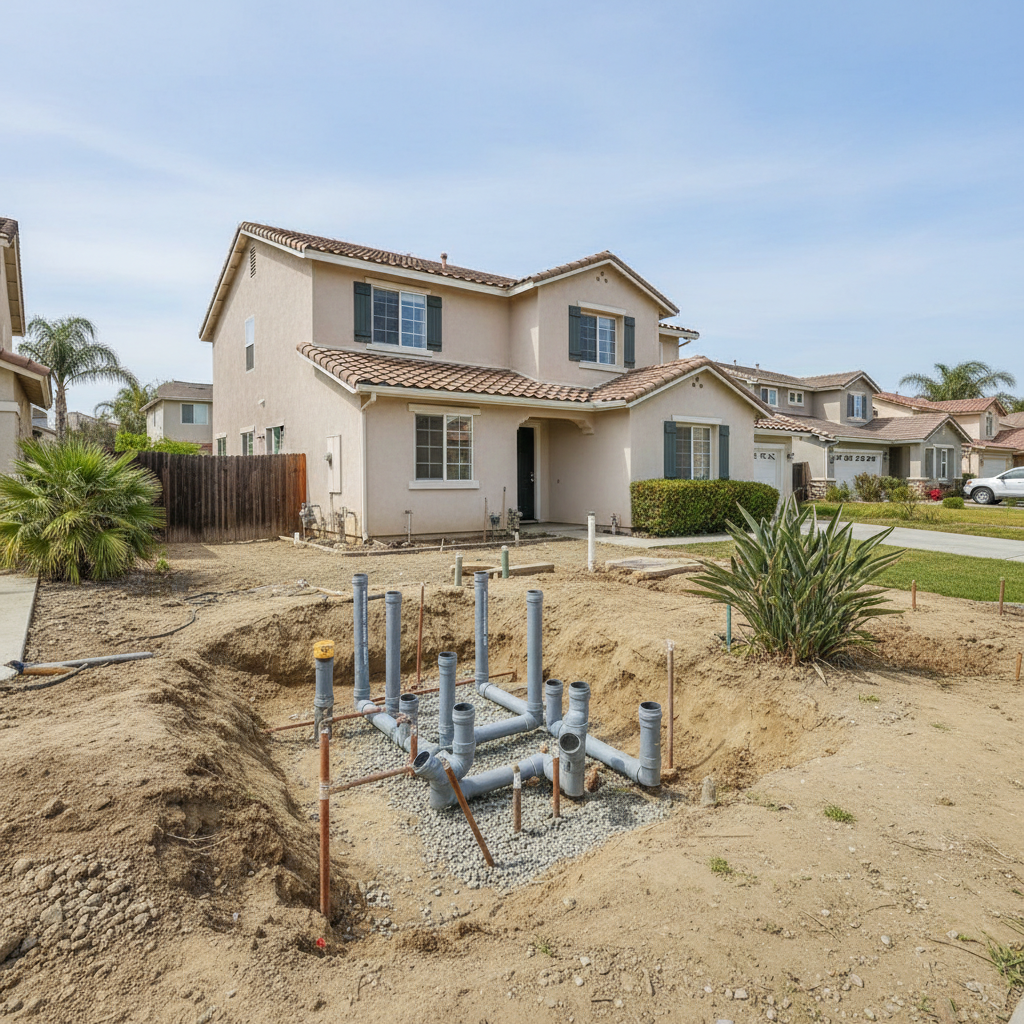
Okay, let's talk about plumbing rough-ins. If you're planning a kitchen or bathroom remodel here in Norwalk, this is one of those really important stages you absolutely can't mess up. It's not the flashy part – you won't even see it once the walls are closed up – but it's truly the bedrock for everything else.
What Exactly Is a Plumbing Rough-In?
Simply put, a plumbing rough-in is when all the water supply lines, drain lines, and vent pipes get installed and connected inside the walls and floors. This happens before any drywall goes up or any fixtures are put in. Think of it like the skeleton of your plumbing system. You'll see pipes sticking out where your sink, toilet, shower, or dishwasher will eventually go. The whole point is to get those pipes in just the right place, at the right height, and with the correct connections, all while following the local building code, of course.
You can't just run pipes wherever; we're talking about really precise measurements for things like drain traps, vent stacks, and water supply lines. What happens if the drain for your new kitchen sink is an inch too high or too low? Or if the hot and cold lines for your shower are reversed? That's a big problem. And trust me, fixing those kinds of mistakes after the drywall is up and the tile is laid? That's when your budget and your patience really take a hit. It's just not fun.
Why Local Expertise Matters in Norwalk
This isn't just some generic plumbing job; local conditions actually play a much bigger role than you might think. Here in Norwalk, we've got a real mix of housing styles, everything from those charming post-war homes in neighborhoods like the one around Amelia Earhart Elementary, to newer builds. Each era often comes with its own plumbing quirks and specific challenges.
- Older Homes: A lot of our homes around here were built in the 50s and 60s. That means you're often dealing with older galvanized pipes or cast iron drains that might be corroded or just too small for modern fixtures. A good rough-in means knowing when to replace something and when you can safely tie into existing lines, plus how to properly switch materials without causing future leaks. You can't just assume everything's good to go, can you?
- Soil Conditions: Southern California soil, especially in areas like ours, can be expansive clay. This means it swells when wet and shrinks when dry. While it's more of a concern for foundations, it can still affect underground drain lines if they're not properly bedded or if there's any shifting. Knowing how to correctly support and pitch those lines is absolutely key.
- Permitting & Inspections: Every city has its own specific way of interpreting the Uniform Plumbing Code (UPC), even if the core code is the same. Norwalk's building department definitely has its own approach, and you need a contractor who knows the local inspectors and what they're looking for. I've seen jobs get held up because a vent pipe wasn't exactly to their liking or a cleanout wasn't accessible enough. Knowing these little details upfront saves you time and those annoying re-inspection fees.
- Water Pressure: Our water pressure can vary quite a bit across Norwalk. Sometimes you need to think about pressure regulators or specific pipe sizing to make sure you get good flow to multiple new fixtures, especially in a master bathroom remodel with several shower heads or a big soaking tub.
Common Rough-In Projects We See in Norwalk
Most of the time, when we're talking rough-in, it's for a kitchen or bathroom remodel. These are the rooms with the most plumbing, naturally.
- Kitchen Expansions: If you're moving your sink to a new spot, adding a prep sink on an island, or relocating your dishwasher, that's a full rough-in job. We're running new hot and cold lines, new drain lines, and extending vents.
- Bathroom Layout Changes: Moving a toilet, shifting a shower, or adding a double vanity means tearing into walls and floors to reroute everything. This is where really precise planning for drain slopes and vent connections becomes absolutely critical.
- Adding a Laundry Room: Sometimes folks want to move their laundry from the garage into the house. That's a pretty significant rough-in, requiring dedicated hot and cold lines, a large drain, and a proper vent.
When you're doing a big remodel, like a kitchen transformation with Classic Kitchen Remodeling, the plumbing rough-in is one of the first major steps after demolition. It just has to be done right the first time, by someone who understands not just plumbing, but also the specific challenges and requirements of building here in Norwalk. Don't let anyone tell you it's a 'simple' job – simple mistakes can lead to very expensive fixes down the line.
So, when you're planning your next big project, make sure your contractor truly understands the rough-in process and why local knowledge is a non-negotiable part of getting it done right.